
Yoga at Home to Rebuild Focus After Screen Overload
advertisements
To rebuild focus after screen overload, you must address the physiological friction caused by digital saturation. Beyond simple relaxation, yoga serves as a neural recalibration tool, stripping away the mental static of blue light and constant notifications.
By integrating intentional movement and breathwork, you shift from reactive scrolling to proactive clarity, restoring the cognitive depth required for a productive life.

Summary of Insights
- Decoding the physiological tax of digital fatigue.
- The intersection of breathwork and cognitive restoration.
- Targeted asanas for spinal integrity and ocular strain.
- 2026 data on screen-time trends and mental health.
- Cultivating sustainable habits for long-term attention.
Why Is Digital Fatigue Draining Your Mental Clarity?
By 2026, the constant ping of connectivity has birthed “popcorn brain”—that twitchy state where thoughts jump before they ever settle. It is a biological exhaustion of the prefrontal cortex, which spends its day filtering noise rather than deep-diving into meaningful work.
Yoga offers a physical circuit breaker. It shifts the body out of a low-grade, sympathetic “fight-or-flight” hum and into a parasympathetic state.
This isn’t just about stretching; it is about telling the brain the perceived digital emergency has ended so it can finally rebuild focus after screen overload.
advertisements
What Is the Link Between Posture and Cognitive Function?
Slumping over a keyboard does more than hurt your neck; it physically collapses the space where your breath lives.
When lung capacity is restricted, oxygen delivery to the brain dips, making even simple information processing feel like wading through heavy mud.
Maintaining an upright spine in “tadasana” (mountain pose) isn’t just about looking poised—it is a cognitive hack.
advertisements
Research suggests that spinal alignment correlates with alertness. By undoing the “tech-neck” curve, you clear the physical blockages that mask themselves as mental burnout.
How Does Pranayama Restore Your Attention Span?
Pranayama, or controlled breathing, serves as a direct manual override for the vagus nerve. Techniques like “Nadi Shodhana” (alternate nostril breathing) act as a neural stabilizer, balancing the brain’s hemispheres to replace frantic energy with a grounded, singular focus.
Deep, rhythmic breathwork increases your CO2 threshold, which counterintuitively improves oxygen delivery to high-demand neurons in the visual cortex.
Using these techniques between deep-work sessions is the most efficient way to rebuild focus after screen overload without needing a nap.
++ Yoga at Home When You Feel Disconnected from Your Body
Which Yoga Poses Are Best for Eye Strain?
Digital eye strain is often a result of fixed-distance muscle fatigue. “Trataka,” or fixed-point gazing, retrains the eyes to move beyond the pixelated glow. It’s a specialized form of ocular yoga that feels strange at first but provides near-instant relief.
Read here: Yoga at Home for Remote Workers with Long Sitting Hours
Inversions like “Uttanasana” (standing forward fold) are also transformative. By bringing the head below the heart, you encourage a rush of fresh blood to the face and scalp, cooling eyes that have spent eight hours absorbing blue light. This physical cooling often translates directly to mental stillness.

2026 Digital Wellness Statistics
The numbers suggest that “trying harder” to focus is a losing battle without physical intervention. We are working more, but our capacity to remain present is narrowing significantly.
| Metric | 2024 Average | 2026 Average | Impact on Focus |
| Daily Screen Time | 6.5 Hours | 8.2 Hours | High Cognitive Load |
| Attention Span | 47 Seconds | 39 Seconds | Increased Fragmentation |
| Reported “Brain Fog” | 32% | 51% | Reduced Work Efficiency |
| Yoga Adoption | 15% | 24% | Improved Stress Recovery |
Data inspired by trends reported by the Global Wellness Institute, reflecting the rising demand for integrated mind-body health solutions.
When Should You Practice Yoga for Maximum Results?
Timing is everything. A 15-minute flow during the mid-afternoon “slump” usually outweighs an hour-long session late at night.
Stepping onto the mat the moment the laptop closes prevents the “residue” of work emails from infecting your personal evening.
Consistency beats intensity every time. Short intervals of movement keep the nervous system from hitting a point of no return.
++ Morning Meditation for Athletes Enhances Training Recovery
Regularity makes it easier for the body to remember how to rebuild focus after screen overload, turning recovery into a reflex rather than a chore.
What Are the Best Home Yoga Sequences?
Start with a seated cat-cow to mobilize a stiffened spine, then move into a downward-facing dog to decompress the lower back. These foundational movements address the specific physical stagnation inherent in desk-bound roles.
Incorporate “Garudasana” (eagle pose) arms to target the rhomboids and trapezius muscles—the areas where we typically “wear” our stress.
Adding a low lunge with a twist stimulates the spine and refreshes the internal systems, moving stagnant energy out of the torso.
End with a focused “Savasana.” Five minutes of total stillness allows the nervous system to integrate the work you’ve done. This quietude is the final, essential step to rebuild focus after screen overload before you step back into your day.
How to Create a Distraction-Free Yoga Space? Rebuild Focus After Screen Overload
If your yoga mat is within arm’s reach of a charging cable, you aren’t fully disconnecting. Your environment should signal a complete departure from the digital world. Use soft lighting or natural scents like rosemary to anchor your brain in the physical present.
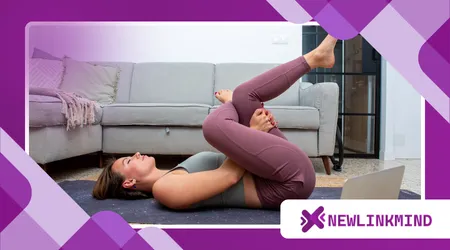
A dedicated corner—even if it’s small—acts as a psychological anchor. When you stand in that space, your brain knows the pings and notifications are irrelevant. This spatial boundary is the first line of defense in the quest to rebuild focus after screen overload.
Final Reflections
Reclaiming mental clarity isn’t about willpower; it’s about biology. When we address the physical toll of our screens, the mind follows. Yoga isn’t a luxury in the digital age—it’s a necessary maintenance protocol for the modern human.
By prioritizing your spine, your breath, and your vision, you transform your home into a recovery suite. This proactive approach ensures you remain the architect of your attention, maintaining the sharp, calm awareness required to navigate a hyper-connected world without losing your center.
For more information on the neurological benefits of mindful movement, visit the Harvard Medical School Health Blog for evidence-based wellness updates.
FAQ: Frequently Asked Questions
How long does it take to see results?
Initial relief from mental fog often happens during the first session. However, structural changes in your ability to sustain focus typically emerge after three weeks of consistent, short daily practices.
Do I need expensive equipment?
Not at all. A non-slip mat is helpful, but the most critical “equipment” is a quiet space. You can substitute yoga blocks with thick books or firm pillows to make poses more accessible.
Is yoga better than a nap for brain fog?
While sleep is vital, yoga provides active recovery. It clears the physiological stagnation caused by screens—something a nap doesn’t always address. It’s about refreshing the system, not just turning it off.
Can I do these poses in my work clothes?
Most focus-building poses can be modified for a chair or done in comfortable work attire, making it possible to integrate these resets directly into your office hours.
++ Screen Time Overload? Combat Eye Strain With This Restorative Yoga Sequence