
Yoga pour les seniors : adapter la pratique aux limitations visuelles
publicités
Practicing yoga as a senior involves more than physical movement; it is about reclaiming confidence when sight begins to fade.
Adapting practice for vision limitations ensures that safety remains the priority, replacing visual dependence with tactile feedback and auditory precision.
By shifting focus toward internal stability, practitioners can navigate their mats securely, fostering a resilient connection between mind and body.
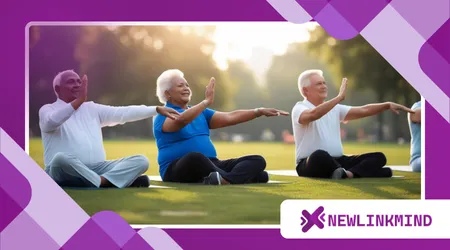
Résumé
- The Sensory Shift: Navigating the psychological and physical impact of sight loss.
- Spatial Anchoring: Creating a “fail-safe” environment for movement.
- The Power of Sound: Why verbal precision outpaces visual demonstration.
- Proprioceptive Tuning: Training the nervous system to “see” through the feet.
- Tactile Architecture: Using textures and contrast to map the mat.
- Teaching Beyond Sight: A masterclass in directional cueing for instructors.
What is the Real Impact of Vision Loss on Senior Mobility?
When macular degeneration or glaucoma enters the frame, the world loses its sharp edges, and with them, a senior’s sense of safety.
Depth perception falters, transforming a simple step into a high-stakes calculation. This creates a hesitation that often leads to a sedentary lifestyle, which paradoxically increases the risk of the very falls they fear.
publicités
Yoga bridges this gap by shifting the practitioner’s internal GPS. Instead of relying on a mirror or a teacher’s silhouette, the focus moves to the weight distribution in the heels and the engagement of the pelvic floor. It is about replacing external sight with internal vision.
How Does Proprioception Replace Visual Cues in Yoga?
Proprioception is the body’s quiet conversation with gravity. When the eyes can no longer distinguish the floor from the wall, the nervous system must sharpen its ability to sense limb position.
This “body awareness” is a skill that can be rebuilt through slow, intentional sequences that emphasize grounding.
publicités
By focusing on the “four corners of the feet,” seniors develop a visceral map of their surroundings.
This internal orientation provides a sturdier foundation than any visual horizon line ever could, fostering a sense of balance that feels earned from the inside out.
Why is Adapting Practice for Vision Limitations Essential for Safety?
Standard yoga classes are visual minefields. An instructor’s “watch me” is an accidental barrier to entry for someone with low vision.
Without modifications, the risk of a misstep is high. According to data from the Institut national du vieillissement, falls are the primary cause of hip fractures, making stability a non-negotiable priority.
Adapting the flow removes the guesswork. By prioritizing “contact points”—a hand on a chair or a foot against a wall—we create a physical feedback loop.
This structural safety net allows the practitioner to breathe into a pose rather than tensing up in anticipation of a stumble.
Which Yoga Poses Are Safest for Visually Impaired Seniors?
Standing balances, often the most stressful part of a class, become empowering when anchored.
Tree Pose, for instance, isn’t about standing in the middle of the room; it’s about feeling the cool, steady support of a wall. This touchpoint acts as a constant spatial north star.
Seated variations, like Chair Sun Salutations, offer a different kind of freedom.
++ Yoga pour les seniors : explorer la conscience corporelle après 70 ans
They allow for the full range of spinal extension and flexion without the vertigo that often accompanies rapid changes in head position. Here, the chair becomes an extension of the body’s own structure.
Comparative Benefits of Sensory Yoga Techniques
| Technique | Avantage principal | Mise en œuvre |
| Tactile Mapping | Spatial Certainty | Texturized Mat Edges |
| Auditory Precision | Flow Continuity | Descriptive Directional Cues |
| Wall-Anchoring | Vertigo Mitigation | Constant Physical Contact |
| High-Contrast Tools | Boundary Definition | Neon Tape on Dark Props |
What are the Best Tools for Adapting Practice for Vision Limitations?
Innovation in this space is often surprisingly low-tech. A high-contrast mat—bright yellow against a dark floor—is a game-changer for those with remaining peripheral vision. It defines the “safe zone” with a clarity that standard equipment lacks.
Tactile markers, such as small “bump dots” placed on the center of the mat, provide instant orientation.
En savoir plus: Yoga pour seniors adapté aux modes de vie et aux besoins ruraux et urbains
These physical braille-like cues allow for adapting practice for vision limitations in a way that is subtle and dignifying, removing the need for constant verbal redirection from an observer.
How Can Instructors Improve Communication for Low-Vision Students?
Teachers must abandon vague gestures. “Move like this” is meaningless; “Inhale your right thumb toward your left shoulder” is actionable.
This level of precision requires an instructor to be deeply present, translating movement into a rich, auditory landscape.
The rhythm of the class must also shift. There is a specific kind of “processing lag” that occurs when a student is translating sound into physical action.
++ Méditation au travail pour gérer l'anxiété et la pression professionnelles
Giving a senior three extra breaths to find their alignment isn’t just a courtesy—it’s a prerequisite for a successful, injury-free practice.
When Should Seniors Seek Specialized Low-Vision Yoga Classes? Adapting Practice for Vision Limitations
Mainstream classes can be overwhelming, but specialized “Sensory Yoga” sessions provide a curated environment free of tripping hazards like stray blocks or water bottles.
These spaces foster a unique community where the shared experience of sensory change is understood, not managed as a “problem.”
In these settings, adapting practice for vision limitations is the standard, not the exception. The focus shifts entirely toward the “felt sense” of the movement.
This communal approach shatters the isolation that often accompanies vision loss, replacing it with shared resilience and collective grace.
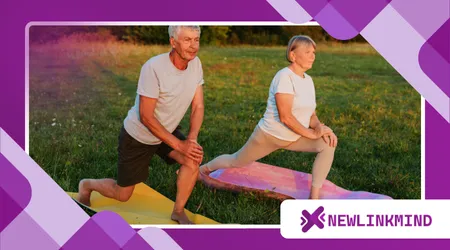
Building Confidence Through Consistent Modified Practice
Muscle memory is the ultimate substitute for sight. When a sequence is repeated enough, the brain stops asking “where am I?” and starts saying “I know this.” This transition from conscious effort to subconscious flow is where true healing begins.
Confidence on the mat eventually spills over into the grocery store or the sidewalk.
Par adapting practice for vision limitations, we aren’t just teaching poses; we are helping seniors navigate a world that has become blurry with a newfound, unshakable sense of center.
Reflections on the Mindful Eye
The beauty of yoga has never been in how a pose looks, but in how it feels. As vision narrows, the opportunity for introspection expands.
This adaptation isn’t a compromise—it’s an evolution. By embracing the wall, the chair, and the power of the breath, seniors prove that even when the eyes dim, the spirit can remain remarkably focused.
For more information on staying active with sensory changes, explore the resources at VisionAware, which offers practical advice for maintaining an independent lifestyle through vision loss.
FAQ (Foire aux questions)
Is it possible to do yoga with total blindness?
Absolutely. Many blind practitioners excel by using “tactile mats” with raised center lines and edges. The practice becomes a moving meditation centered entirely on the body’s internal feedback rather than external visual cues.
Does yoga help with eye-related balance issues?
While it won’t fix the inner ear or the retina, it trains the brain to rely more on the soles of the feet and the core muscles. This “functional balance” is the most effective defense against the dizziness often associated with vision loss.
Can I practice at home alone?
It is wise to start with an instructor to set up your space safely. Once you have a clear, hazard-free zone and have mastered your “anchor points,” a home practice is an excellent way to build daily consistency and confidence.
What should I look for in a yoga mat?
Seek out high-contrast colors (e.g., bright orange or white) and a non-slip texture. Some mats specifically designed for the visually impaired feature raised ridges that help you stay centered without needing to look down.
How do I explain my needs to a new teacher?
Be direct. Tell them you need “descriptive, directional cueing” and that you will be using a wall or chair for stability. A professional instructor will welcome the opportunity for adapting practice for vision limitations to ensure everyone’s safety.