
Yoga at Home for Active Recovery After Workouts
advertisements
Prioritizing Active Recovery After Workouts through home-based yoga is a transformative strategy for modern athletes.
Rather than relying on passive rest, this mindful approach uses low-intensity movement to stimulate circulation and repair tired tissues.
By integrating specific poses into your daily routine, you can effectively bridge the gap between intense physical exertion and long-term performance longevity from your living room.
Summary of Contents
- Redefining Recovery in the Modern Era
- The Biological Logic of Yoga
- The Myth of the “Rest Day”
- Strategic Poses for Real Results
- Data: Mobility vs. Stagnation
- Common Queries Answered
What is the Real Function of Yoga in Active Recovery After Workouts?
For too long, recovery was synonymous with doing nothing. However, the sports science landscape of 2026 confirms that total immobilization is often counterproductive.
Yoga serves as a sophisticated bridge, providing low-intensity movement that keeps blood circulating without the mechanical tax of another heavy session.
advertisements
When you flow through a restorative sequence, you aren’t just stretching; you are manually assisting your lymphatic system.
This process helps clear out the metabolic debris—like hydrogen ions and excess fluids—that accumulates in your tissues after a grueling gym session or long run.
Why Is Home Yoga Often Superior to Passive Rest?
There is something inherently counterintuitive about sitting on a couch to “heal” muscles that were just under extreme tension. Passive rest often leads to localized stiffness and a sluggish nervous system.
advertisements
In contrast, stepping onto a mat at home allows you to maintain joint lubrication and fascial elasticity in a private, low-pressure environment.
Practicing at home removes the performance anxiety of a studio, allowing you to actually listen to your body’s signals rather than competing with the person on the next mat.
This autonomy is where real healing happens, as you can spend three minutes in a hip opener if that’s where the tension resides.
How Does Yoga Science Actually Repair Muscle Tissue?
The magic happens within the fascia—the connective webbing that wraps around every muscle fiber. Intense exercise can cause this tissue to become “sticky” or restricted.
Yoga facilitates a gentle release, smoothing out these layers so that oxygenated, nutrient-rich blood can reach the micro-tears in the muscle more efficiently.
Research from the American Council on Exercise highlights how controlled movement keeps the heart rate high enough to promote circulation but low enough to avoid further cortisol spikes.
This balance is the “sweet spot” for cellular reconstruction and hormonal stabilization.
Which Poses Yield the Best Results for Active Recovery After Workouts?
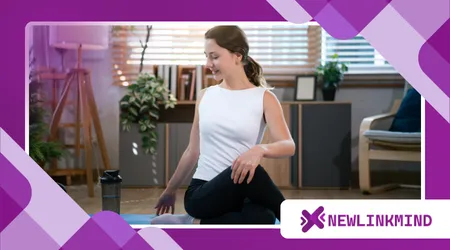
You don’t need a complex handstand to recover; in fact, you shouldn’t do one. Focus on “floor work” that targets the major prime movers.
Poses like Pigeon or a supported Bridge allow gravity to do the heavy lifting, opening the hips and chest while decompressing a spine that has been under load.
Legs-Up-The-Wall is perhaps the most underrated tool for Active Recovery After Workouts.
++ Yoga at Home for Seasonal Mood Shifts and Emotional Balance
By simply reversing the flow of blood and lymph from the lower extremities, you reduce the “heavy leg” sensation common in runners and cyclists, all while calming the central nervous system.
When Should You Roll Out Your Mat for Optimal Healing?
Timing is everything, yet it’s often misunderstood. Hitting a yoga session within a few hours of your main workout can intercept the inflammatory response before it peaks.
This proactive approach often blunts the severity of delayed muscle soreness that usually hits 48 hours later.
Read more: Yoga at Home to Rebuild Focus After Screen Overload
Early morning sessions on your “off” days are equally potent. They act as a mechanical wake-up call for the body, signaling the brain that while the intensity is down, the requirement for mobility remains.
It’s about keeping the engine warm without burning more fuel.
Comparative Analysis: Movement vs. Stagnation
| Metric | Home Yoga (Active) | Total Rest (Passive) |
| Circulatory Response | Dynamic and Targeted | Baseline/Slow |
| Fascial Health | Hydrated and Elastic | Risk of Adhesions |
| Nervous System | Parasympathetic Shift | Neutral |
| Psychological State | Mindful/Focused | Potential Lethargy |
| Recovery Window | Shortened by 20-30% | Standard |
How Does Mindful Breathing Impact Physical Gains?
We often overlook the fact that muscle growth happens during rest, not during the lift. If your nervous system remains in a high-alert “sympathetic” state, your body struggles to shift into repair mode.
Yoga forces this transition through the breath, specifically by lengthening the exhalation to stimulate the vagus nerve.
This shift lowers systemic inflammation. When you breathe deeply into a stretch, you are effectively telling your brain that the “threat” of the workout is over.
++ Morning Meditation Using Breath Ratios for Calm Awareness
This allows the body to prioritize protein synthesis and glycogen replenishment over stress-response survival.
What Do Beginners Need to Know About This Approach?
The biggest barrier is often the ego. Many athletes feel that if they aren’t sweating, they aren’t working. In the context of healing, however, the goal is “nourishment” rather than “exhaustion.”
You only need a quiet corner and perhaps a few pillows to start seeing a difference in your training longevity.
Consistency beats intensity every time here. A ten-minute routine focused on your specific tight spots is far more effective than a grueling ninety-minute class once a month.
Treat your recovery sessions with the same discipline as your heavy lifting days.

Why Is Prop Usage a Sign of Intelligence, Not Weakness? Active Recovery After Workouts
In a recovery context, props like blocks and straps are not “crutches”—they are tools for precision. They allow you to reach a state of passive tension where the muscle can truly let go.
If you are struggling to reach your toes, your muscles are contracting to protect themselves, which defeats the purpose of the session.
Using a bolster under the knees or a strap for a hamstring stretch ensures that your alignment is perfect.
This prevents “compensatory” movements where you inadvertently strain your lower back while trying to stretch your legs, a common mistake that leads to unnecessary setbacks.
The Long-Term Impact on Longevity
Integrating these mindful sessions creates a sustainable feedback loop. You become more aware of small imbalances before they turn into chronic injuries.
Over years of training, this heightened body literacy is what separates the athletes who stay in the game from those who are sidelined by preventable wear and tear.
Viewing your home practice as a non-negotiable part of your training cycle ensures that you aren’t just working hard, but working smart.
For broader perspectives on how movement impacts long-term wellness, the Mayo Clinic offers extensive resources on integrating therapeutic exercise into daily life.
FAQ:
Is there a risk of overstretching during recovery?
Yes. When muscles are fatigued, they can be more susceptible to strain. The goal is a “mild tension” (around a 4 out of 10 on an intensity scale), never sharp pain or extreme pulling.
Does yoga count as a “workout” on my rest day?
When done correctly for recovery, no. It should feel like a reset. If your heart rate stays low and you feel more energized afterward than when you started, you’ve done it right.
Can I do this at night before bed?
Absolutely. In fact, the parasympathetic shift induced by a restorative home session is one of the most effective ways to improve sleep quality, which is the ultimate recovery tool.
What if I only have five minutes?
Five minutes of “Legs-Up-The-Wall” is infinitely better than five minutes of scrolling on your phone. Even a single pose can trigger the circulatory benefits needed to kickstart the repair process.
++ The 10-minute yoga workout that instantly relieves tight muscles and fights fatigue